
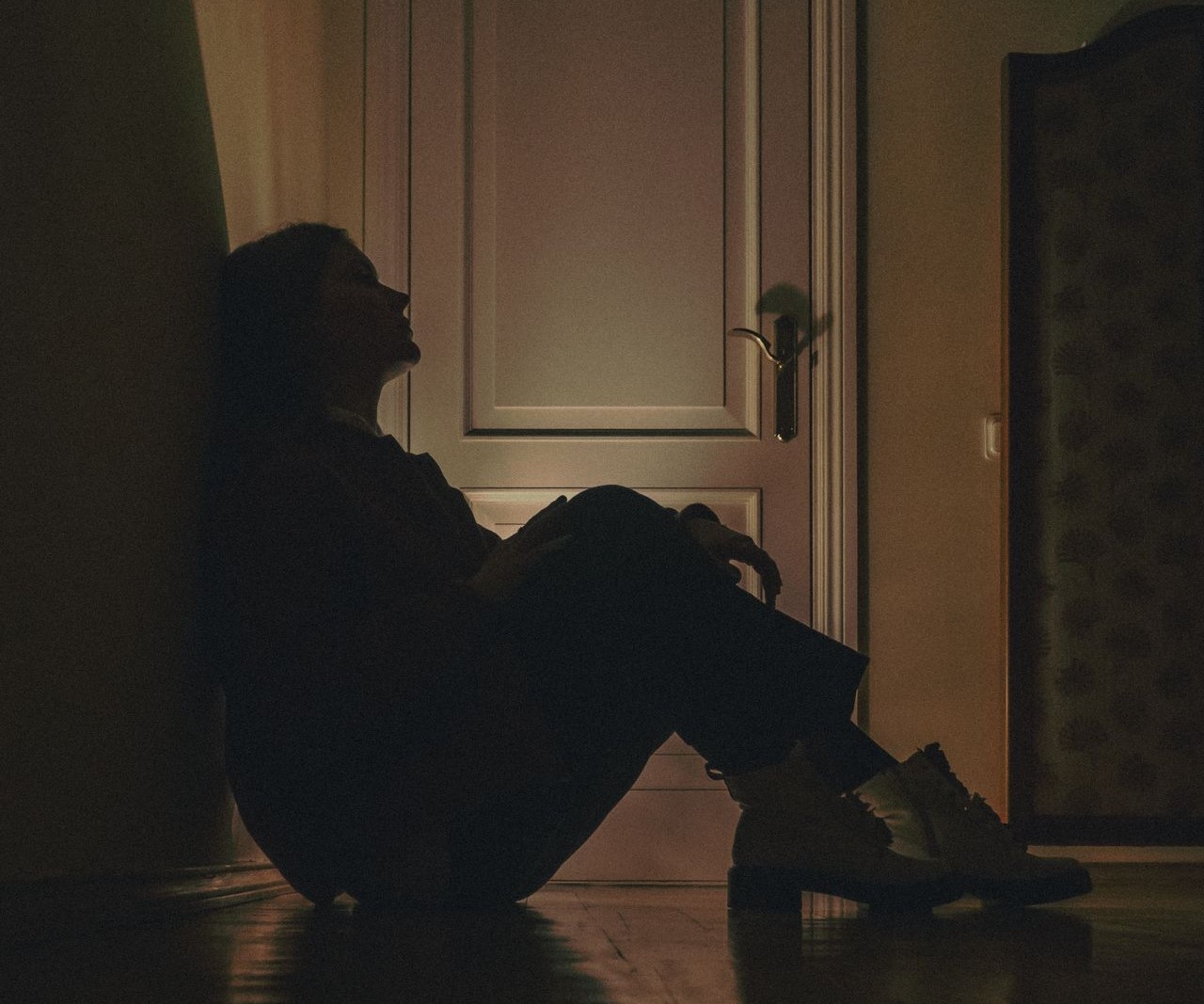

Trigger Warning: This article contains references to suicide, grief and mental health. Please read with care and only if you feel emotionally ready to do so.
There are moments in life that change us forever, especially the ones that arrive without warning. They ask us to hold emotions that should never have to coexist and leave us questioning whether the human heart and body is truly capable of carrying so much. A few days ago, my family lived through one such moment or rather an entire day.
My family had gathered to celebrate the wedding of my nephew. The first ever wedding of his generation. Obviously, every one was looking forward to this. So much so that cousins and family flew from different parts of the world to witness and bless the union of a young boy, who in our eyes was still the little baby we held in our arms.
While excitement and anticipation of the afternoon wedding dawned on us, we were jolted out of our wits when we received the devastating news that my 54-year-old sister-in-law (the wife of my close cousin) had passed away. She had taken her life. Now let that sink in.
Albeit the spectrum of emotions I experienced, my first response was to reach my cousin’s house and see if I could be of any help to him. Very soon after having spent a couple of hours there, I found myself getting dressed to attend the wedding of my other cousin’s son, which had been planned for months in advance. I was present to bless the beginning of one life chapter while trying to comprehend the abrupt ending of another.
Even as I write these words, they feel surreal.
How does one move from a home filled with silence, tears and unanswered questions to a celebration filled with music, laughter and hope? How does one comfort grieving family members in the morning and then smile for a bride and groom by the afternoon without feeling as though the heart is being pulled in two completely different directions? There are rituals for weddings and rituals for funerals, but there are no rituals that teach us how to move between the two within the span of a single day.
As someone who has always experienced life through the lens of deep empathy, I have often found myself absorbing the emotions of those around me. It is both a gift and, at times like these, an overwhelming burden. Throughout that day, I was unable to simply process my own grief. I found myself feeling the disbelief of one family member, the shock of another, the attempts of some to remain composed for the sake of everyone else and the hesitant smiles of those who wondered if it was even acceptable to feel joy while mourning someone they loved. By the time I returned home that evening, I was emotionally exhausted in a way I had never experienced before. It was not physical tiredness. It was the kind of fatigue that settles deep within you after your heart has spent an entire day trying to make sense of emotions that refuse to coexist peacefully.
In the days that followed, I found myself replaying conversations and memories over and over again. Like everyone else in the family, questions began to surface. So many questions. Questions about what happened, what she may have been feeling, whether there were signs that any of us misunderstood or moments that, in hindsight, might have carried a different meaning. Yet I found myself afraid to voice many of those questions because every conversation felt capable of opening a fresh wound or a can of worms. Every answer seemed likely to create even more questions, and none of them could alter the one reality we were all struggling to accept, that someone we loved was no longer with us. At some point, I realised that our search for answers was really our search for relief from grief, and those are not always the same thing. This is where I want to pause and thank my therapist for working with me over the past few years to make me realise how grief affects me and how I process it.
One aspect of our loss keeps coming back to me because it challenges one of the assumptions many of us carry about mental health. My sister-in-law was not someone who ignored her struggles or refused support. She was receiving professional help. She had reached out. From what many of us could see, she appeared to be making progress. That reality has been one of the most difficult parts of this experience because it reminds us that mental illness is often far more complex than we understand. While therapy, counselling and medical care help countless people recover and lead fulfilling lives(and I truly believe they save lives every day), there are also situations where healing is neither linear nor predictable. Sometimes people continue to carry pain that remains invisible even to those who love them deeply. Acknowledging this complexity should never discourage anyone from seeking professional help. If anything, it should strengthen our resolve to ensure that support is ongoing, compassionate and free from judgement.
Perhaps one of the reasons conversations around this subject remain so confusing is because we often use the terms mental health and mental illness as though they mean the same thing. They do not.
Every single one of us has mental health in much the same way that we all have physical health. It changes throughout our lives depending on our experiences, relationships, work pressures, losses and the many challenges that come with simply being human. Mental illness, however, refers to diagnosable conditions that often require specialised care, treatment and sustained support. Understanding this distinction is important because it reminds us that caring for our mental wellbeing should never begin only when a crisis emerges. Just as we do not wait for serious physical illness before paying attention to our bodies, we should not wait until someone reaches an emotional breaking point before recognising the importance of psychological wellbeing.
I also find myself thinking about the phrases we continue to hear whenever tragedy strikes. “People today are too sensitive.” “This never happened in our generation.” I wonder if those statements reveal more about our collective silence than they do about reality. Perhaps these struggles did exist. Perhaps they simply remained hidden behind closed doors, buried beneath family honour, social expectations and the belief that enduring emotional pain quietly was somehow a measure of strength. Today, we have greater awareness, better access to professionals and more language to describe what people experience internally. That is progress, and it is one we must continue to embrace rather than dismiss. I still struggle with all of the above. Again perhaps because I was brought up to silently tolerate, not speak, not cry and then display strength. Even now I sometimes catch myself feeling proud of handling things on my own at the cost of my mental well being. This is not just silly, it is outright absurd and it is taking me a lot to be able to change that. I am sure some of us from my generation would still feel the same and say, “Carry on! You are strong”
As a Coach, I have spent years listening to people’s stories. I have learnt that beneath titles, achievements and carefully managed appearances, every individual is going through something that the world cannot see. Coaching has taught me that transformation rarely begins with advice. It begins with creating a space where another human being feels safe enough to tell the truth about what they are experiencing. While Coaching is not therapy and should never replace professional mental health care, it has reinforced one lesson that I believe applies to all of us. Genuine listening can be profoundly healing. Imagine what might change if our homes, friendships and workplaces became places where people felt able to say, “I am struggling,” without fearing judgement or shame.
As my thoughts return repeatedly to my sister-in-law, they also return to those whose lives have been altered forever by her absence. My heart reaches out to her children, her immediate family and everyone who loved her. Their grief is only beginning. Long after the condolences stop arriving and life appears to return to normal for everyone else, they will still be learning how to live with an absence that cannot be filled. They will face birthdays, anniversaries and ordinary days that suddenly become extraordinarily difficult because of memories that are more painful than happy. More than anything else, I hope they allow themselves to seek support without hesitation. I hope they find comfort in grief counselling, in therapy, in support groups and in professionals who understand that grief is not something to overcome but something to learn to carry. Healing after such a loss does not mean forgetting the person who died, it means slowly discovering how to continue living while honouring the love that remains. This too is a learning that has emerged after years of my own struggle with grief. It may sound easy to say or write but I know that the journey was not and will never be.
This experience has reminded me that none of us can truly know what another person is carrying within them. We may notice smiles without seeing the sadness beneath them, accomplishments without recognising the exhaustion that accompanies them or strength without understanding how close someone feels to breaking. Perhaps that is why kindness is never wasted, why checking in with someone is never an intrusion and why asking, “How are you, really?” can sometimes become the most important question we ask.
I do not know whether our family will ever find satisfying answers to the questions we continue to have. Perhaps some questions simply remain unanswered. What I do know is that I hope this loss encourages more conversations than conclusions, more compassion than judgement and more willingness to seek help before suffering becomes unbearable. If sharing our story encourages even one person to reach out to a therapist, to confide in a trusted friend, to sit with a grieving family member without trying to fix their pain or to simply ask someone they care about how they are truly doing, then perhaps, amidst our heartbreak, something meaningful will have emerged. My intention is not to narrate a story that becomes something to “talk about” or even gather sympathy for me or my family. My intention to share is to create awareness even if it means for one individual.
Life asked our family to hold grief and celebration in the same hands on the same day. I hope it is a burden we never have to carry again. But I also hope that it leaves us all a little more compassionate, a little more willing to listen and a little less afraid to speak about mental health with the honesty and humanity it deserves.