
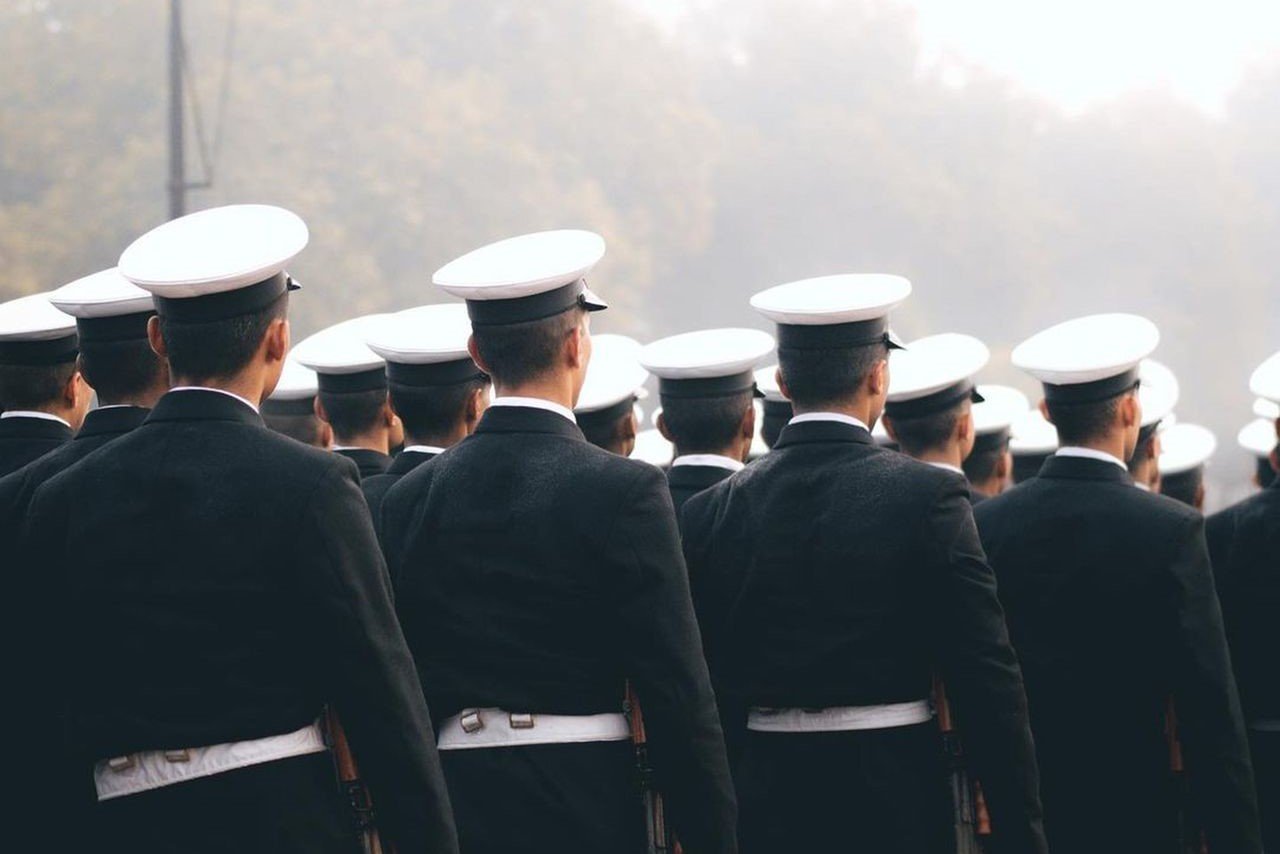

Before people start to judge and bombard me with what is so maddening about military life, here comes the mandatory disclaimer that I have learnt to write since it could be misinterpreted. The opinions are solely mine but the learnings can be for anyone. Military life as it turns out makes most of my DNA being a third generation fauji brat and more importantly fauji wife. These are experiences and observations that have helped me be a better person (I hope! ) and a good Coach.
I have been wanting to write about the military way of life for a while. Binge watching a recent Netflix series made me sit up and write. I am not a military personnel myself. This blog is not about how the series got some things right and some things wrong. It is definitely not about the operation, the acting, the uniforms or even the series itself. Those can be discussed separately. What caught my attention were the nuances. The little things that perhaps someone from outside the military may watch and move past, but which immediately stood out to me and brought back truck loads of memories.
I have grown up around the men, women and families who make up this rather extraordinary community. My grandfather raised a regiment, my father and husband both were and have been involved in a few Operations. And perhaps because I have spent years as a Coach, observing people, behaviours and the things that sit beneath the obvious, I found myself noticing and becoming aware of how things are handled when military life is the very core of your existence. No wonder, so many corporations today would rather hire military veterans in critical roles. Again, this blog is not about the skills they bring to the table. Enough has been said and written about it.
The military is often spoken about in terms of discipline, courage, sacrifice and consistency. All of that is true. But there is a whole other layer to the military way of life that does not make it into the usual descriptions. This is the part that I am very appreciative of, in the series. It tried to give us a glimpse of the same. My father in his true army avatar would tell us stories. He was not an infantry man but belonged to the education corps of the Indian Army. It was a huge advantage when he would tell me stories not as they were but how military training programs are created and what is being assessed. He always said a person’s true character is what a person should really know about themselves. Today, I understand that those stories were actually lessons in human behaviour.
1. Help is always available. You just have to ask or sometimes you don’t even have to do that.
There is something wonderfully uncomplicated about this. In the military fraternity, when someone needs help, it is usually not met with a long discussion about whether it is convenient, whether it is someone else’s responsibility, or whether there is anything in it for us. You ask. Someone shows up. And it is not limited to the person in uniform. Families are woven into this network too. A posting may change, a station may change, people may move across the country, but the invisible safety net remains. Perhaps that is why military children grow up with a strange confidence that there will always be someone to help.
2. There really is no other family quite like the military family.
The word family is not used casually here. The men and women who train together become your family. You can visit each other anytime, you can barge into their respective homes anytime and you do chores together. I have countless memories where my family grew with ease and with no effort. It is as easy as this. You may not have known someone yesterday. You may meet them because your spouse has been posted to the same station. Yet somehow, there is an immediate understanding.
You know what it is like to pack up your life and move. You know what it means when someone leaves on an operational posting. You understand the uncertainty. You understand the waiting and you don’t need to explain any of it. There is a shared language that does not require words. I will of course confess that it may not always be pleasurable since not every person is likeable but then that happens in blood families too!
3. They do not let go of discipline and neither do they let go of fun!
This is perhaps, till recent times, one of the biggest misconceptions about military life. That it is all seriousness, routine and rules. It surely is not.
If anything, people who live with extraordinary discipline also understand the importance of letting their hair down. There is laughter. There is music. There are parties that go on longer than they probably should. There is terrible singing, excellent dancing, ridiculous jokes and an ability to have fun with very little. Big events yes but smaller impromptu meet ups are also very similar. It is simple. When your life demands discipline, consistency and the ability to hold yourself together, you also learn that you cannot be serious all the time. You need to laugh, celebrate, and occasionally forget the rules. And then, when morning comes, you get back to them.
4. Respect is taught. But it becomes automatic when you see the person behind the uniform.
Respect is deeply embedded in military life. Rank matters. Position matters. Protocol matters. But what fascinates me more was what happens when the uniform comes off. You see the person. The father. The mother. The husband. The wife. The young officer who is terrified but will not show it. The woman who carries responsibilities that nobody sees. The man who can be fearless in one moment and deeply vulnerable in another. That is where respect becomes something more meaningful. It moves from I respect your rank to I respect you.
5. Courage and tenderness coexist.
This may be my favourite contradiction. We tend to imagine courage as the absence of fear. But military life teaches something else. You can be afraid and still stand up, you can be vulnerable and still be strong, you can fight fearlessly and love deeply. The ones who know this do this over and over again not just for themselves but for the ones who are around them too.
The men and women who are trained to face some of the most difficult circumstances are also people who love their families fiercely, worry about their children, miss home, celebrate birthdays, tease each other and sometimes simply want to sit down and have a drink with friends.
6. Consistency equals showing up.
My coaching eyes could not miss this one. Military training is often admired for creating discipline. But underneath discipline is something even more powerful, which is consistency.
You do what needs to be done whether you feel like it or not. You can take a break, slow down but it always encourages you to find your way back to show up. You have to follow through because someone else is depending on you. Over time, that becomes less about external discipline and more about identity. You don’t have to be responsible. You simply become someone who is. That, to me, is one of the most powerful lessons of military life.
7. An individual is never quite alone.
There is always someone beside you or behind you. Someone waiting for you or depending on you. The sense of collective responsibility is what makes the military fraternity so distinctive. It is not simply about defending or fighting for a country. It is about belonging to something larger than yourself. With that comes with its own peculiar, beautiful, sometimes maddening logic bringing me back to the dialogue from the series
“Life is hinged on twisted logic… else why would two capable nations fight over barren mountains?”
This is why I call it The Madness Called Military Life. It is not irrational, but it asks you to live with contradictions that would seem impossible anywhere else. To be disciplined and still know how to let go. To be fearless and vulnerable. To leave and yet remain deeply connected. To prepare relentlessly for a war you hope never comes, while building a life full of laughter, friendships and love. I know I come to this with my own biases, and perhaps some of them are still mine to question. But if there is one thing my military upbringing, my years of watching people and my coaching eyes have taught me, it is this: human beings are rarely defined by one trait, one role or one uniform. Sometimes, you understand the person only when you look beyond what they are trained to do and see what they choose to care about. And maybe that is the real madness of military life. It is the extraordinary ability to hold all these contradictions together and still show up, every single day.
Beautifully written article…you have touched upon each aspect with such depth & sensitivity….its beautiful because it highlights how completely opposite qualities coexist within a human being and the entire ecosystem…looking forward to reading more of your work.